If you live in San Jose, your air conditioner isn’t just a comfort system—it’s working through long warm seasons, occasional heat spikes, and continuous demand during dry California summers. That constant usage raises an important question most homeowners eventually face:
How long does an air conditioner last in San Jose?
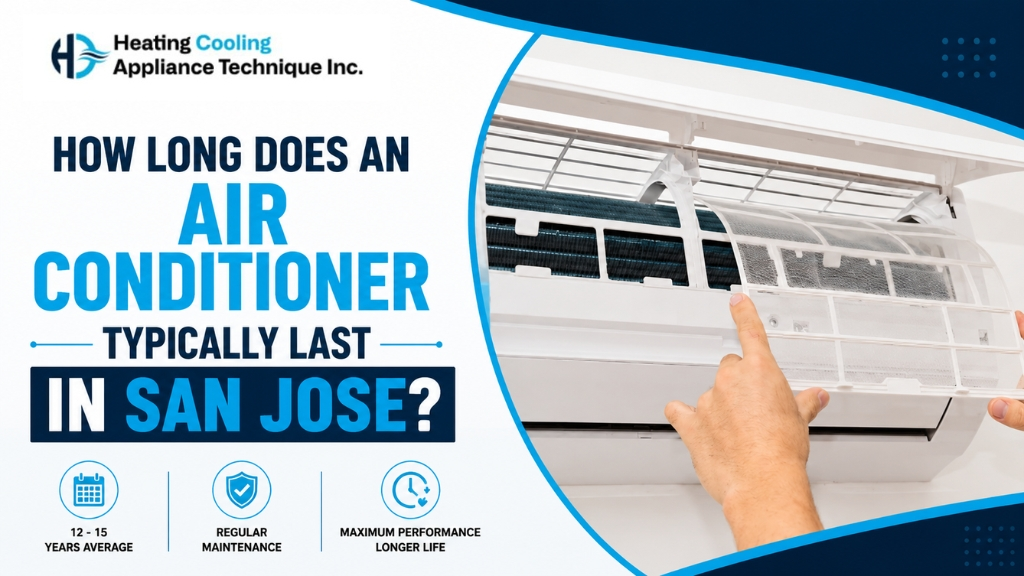
On average, a residential AC unit in San Jose lasts 12 to 17 years, but that number can shift significantly depending on maintenance habits, installation quality, usage patterns, and local climate conditions.
In this guide, we’ll break down realistic expectations, warning signs of failure, and when repair stops being worth it—based on real HVAC field experience in the Bay Area.
AC Lifespan in San Jose – What You Can Realistically Expect
Most air conditioners in San Jose last around 12–17 years, but well-maintained systems can sometimes reach 18–20 years, while poorly maintained units may fail in under 10 years.
This variation is influenced heavily by:
- Cooling demand during hot inland California summers
- Air quality and dust levels
- Maintenance frequency
- Installation quality
- Equipment brand and efficiency rating
San Jose’s relatively moderate coastal climate can help extend lifespan compared to extreme desert regions—but only if the system is properly maintained.
Key Factors That Affect AC Lifespan in San Jose
1. HVAC Maintenance Habits (Most Important Factor)
Regular servicing is the single biggest predictor of AC life expectancy.
A well-maintained system typically includes:
- Annual coil cleaning
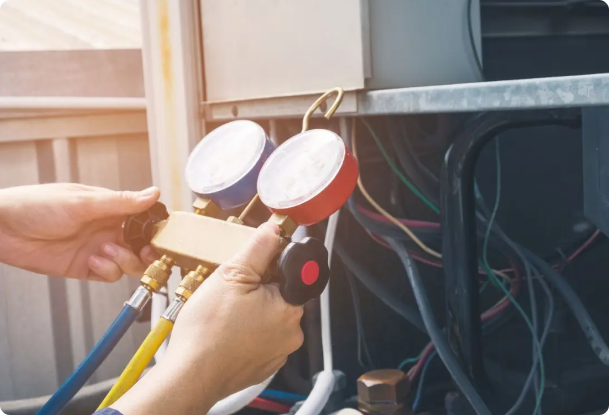
- Refrigerant level checks
- Air filter replacements every 1–3 months
- Electrical component inspection
Neglecting HVAC maintenance in San Jose often reduces system life by 3–5 years.
2. Installation Quality Matters More Than Brand
Even premium air conditioners fail early if installed incorrectly.
Poor installation can lead to:
- Airflow imbalance
- Compressor strain
- Refrigerant leaks
- Short cycling
A properly installed system from a qualified technician—like Heating, Cooling & Appliance Technique Inc—can significantly improve long-term performance and efficiency.
3. Usage Patterns in San Jose Homes
Your AC lifespan depends on how hard it works.
Higher usage occurs in:
- Homes without shade or insulation
- South-facing properties
- Multi-occupant households
- Homes using AC as primary cooling (instead of fans or ventilation)
More runtime = faster wear on compressor and fan motors.
4. Air Quality and Filter Maintenance
Dust, pollen, and pollution affect coil performance and airflow.
Dirty filters cause:
- Reduced cooling efficiency
- Overheating of components
- Increased energy consumption
- Shortened system lifespan
5. System Size and Efficiency Rating
Older, oversized, or undersized systems tend to wear out faster.
Modern energy-efficient air conditioners:
- Run longer but more consistently
- Reduce strain on components
- Maintain stable indoor temperatures
Signs You May Need AC Replacement in San Jose
If your system is approaching 10–15 years, watch for these warning signs:
Performance Issues
- Weak or uneven cooling
- Rooms cooling at different rates
- System struggling during peak heat
Rising Energy Bills
A sudden spike in electricity usage often indicates declining efficiency.
Frequent Repairs
If you’re calling for air conditioner repair in San Jose multiple times per year, replacement may be more cost-effective.
Strange Noises or Odors
- Grinding or rattling (mechanical wear)
- Musty smells (mold or coil issues)
- Burning odor (electrical issues)
Short Cycling
System turns on and off repeatedly without completing cooling cycles.
Repair vs Replacement – What Makes Sense?
Here’s a simple comparison homeowners can use:
| Condition | Recommended Action |
| Under 8 years old, minor issue | Repair |
| 8–12 years, moderate issue | Evaluate repair cost |
| 12–17 years, frequent issues | Consider replacement |
| 15+ years, major failure | Replace |
Rule of Thumb:
If repair costs exceed 30–40% of a new system, replacement is usually the smarter investment.
How to Extend AC Lifespan in San Jose Homes
Proper care can add years to your system.
Practical AC Maintenance Tips:
- Replace air filters regularly (every 30–60 days in peak season)
- Schedule annual HVAC maintenance in San Jose
- Keep outdoor condenser unit clean and unobstructed
- Use programmable thermostats to reduce stress cycles
- Avoid overworking the system (set reasonable temperatures)
Energy Efficiency and Modern AC Upgrades
Older systems often have SEER ratings below modern standards.
Upgrading to energy-efficient air conditioners offers:
- Lower monthly utility bills
- Better humidity control
- Quieter operation
- Improved indoor air quality
For San Jose homeowners, newer systems also align better with California’s energy efficiency standards and long-term cost savings.
Expert Insight from Local HVAC Experience
Based on field service trends in the San Jose area, most system failures we see happen due to:
- Neglected maintenance
- Delayed filter replacement
- Compressor strain from overheating
- Refrigerant leaks left unaddressed
Homeowners who invest in routine service almost always get closer to the 15–17 year lifespan range.
When to Call an HVAC Professional in San Jose
You should schedule an inspection if:
- Your AC is over 10 years old
- Cooling performance has dropped noticeably
- Energy bills are rising without explanation
- You’ve had multiple repairs in the past 12 months
A professional evaluation from Heating, Cooling & Appliance Technique Inc can help determine whether repair or replacement is the most cost-effective option.
FAQ
1. How long does an AC last in San Jose on average?
Most air conditioners last 12–17 years, depending on maintenance and usage.
2. What shortens AC lifespan the most?
Poor maintenance, dirty filters, and improper installation are the biggest factors.
3. Is it worth repairing a 15-year-old AC?
Usually not. At that age, replacement is often more cost-effective and energy efficient.
4. How often should AC maintenance be done in San Jose?
At least once per year, ideally before the summer cooling season.
5. What is the best time to replace an AC system?
Spring or early fall—before peak summer demand increases pricing and wait times.
Conclusion
In San Jose, an air conditioner typically lasts 12 to 17 years, but that number depends heavily on how well it’s maintained and how efficiently it runs over time.
If your system is showing signs of aging or performance issues, waiting until it fully breaks down often leads to higher costs and discomfort during peak heat.
For expert guidance, diagnostics, or system replacement, Heating, Cooling & Appliance Technique Inc provides local HVAC support tailored to San Jose homeowners—helping you stay comfortable while making the smartest long-term investment.