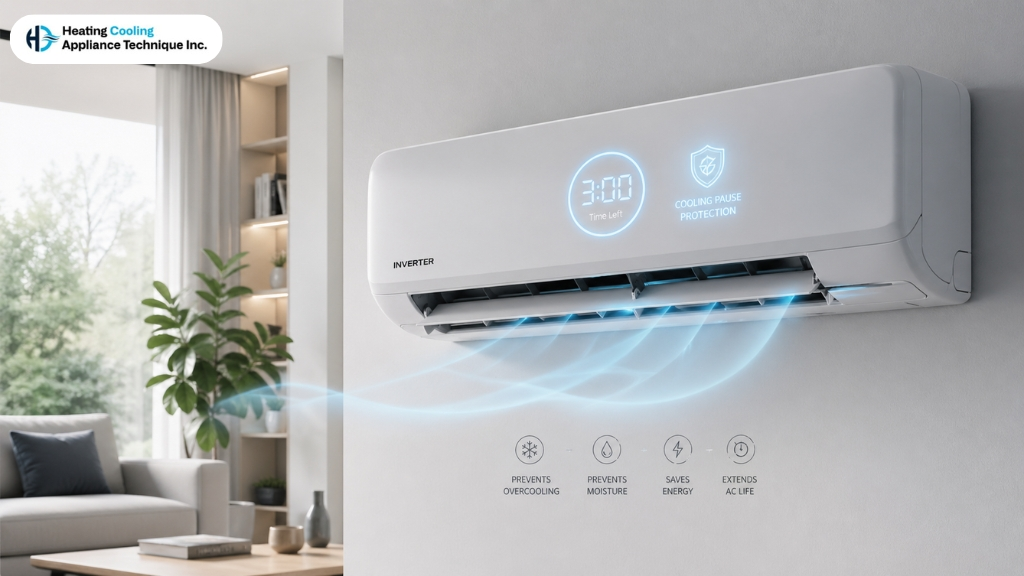
Your air conditioner may feel like a simple “on and off” machine, but behind the scenes, it is managing pressure, refrigerant, electrical load, and compressor safety. That is why one small habit—waiting before restarting it—can make a big difference.
The 3 minute rule for air conditioners means you should wait at least three minutes before turning your AC back on after it shuts off. This short delay helps protect the compressor, prevent unnecessary strain, and reduce the chances of costly AC repairs.
What Does the 3 Minute Rule for Air Conditioners Mean?
The 3 minute rule for air conditioners is a simple HVAC safety practice: after your AC turns off, wait around three minutes before switching it back on.
This applies when:
- You turn the thermostat off and want to restart it.
- The power goes out and comes back.
- A breaker trips and is reset.
- Someone accidentally changes the thermostat setting.
- The AC shuts off and starts again too quickly.
The main purpose is to give the system time to balance internal refrigerant pressure before the compressor starts again. HVAC professionals often connect this rule with short-cycle protection, which helps prevent the compressor from restarting too quickly under pressure. Some thermostats and smart HVAC controls may even use a longer built-in delay, such as five minutes, for added protection.
Why Is the 3 Minute Rule Important?
The compressor is one of the most expensive and important parts of your air conditioner. It moves refrigerant through the system so your home can cool properly.
When the AC shuts off, pressure remains inside the system for a short time. If the unit restarts immediately, the compressor may have to start against high pressure. That can cause extra stress.
Following the 3 minute rule helps:
- Protect the AC compressor
- Reduce electrical strain
- Prevent short cycling
- Improve system reliability
- Lower the risk of premature breakdowns
Think of it like restarting a car engine immediately after stalling on a hill. The engine can do it, but it works harder than it should. Your AC compressor is similar—it needs a brief pause.
What Happens If You Restart Your AC Too Quickly?
Restarting an air conditioner too fast once or twice may not destroy the system immediately. But repeatedly doing it can increase wear and tear.
Possible issues include:
- Hard starts: The compressor struggles to turn on.
- Tripped breaker: The AC draws too much electrical current.
- Short cycling: The system turns on and off too often.
- Reduced cooling performance: The unit may not run long enough to cool evenly.
- Compressor failure: Long-term stress can damage the compressor.
A real-life example: Suppose your AC turns off after reaching the thermostat setting. You feel warm air in another room and quickly lower the thermostat several degrees. The system tries to restart right away, but the compressor has not had enough time to equalize pressure. Over time, this habit can make the system work harder than necessary.
Does Every Air Conditioner Need the 3 Minute Rule?
Most modern air conditioners, heat pumps, and thermostats already have some type of built-in delay. This is often called:
- Compressor delay
- Time delay relay
- Anti-short-cycle protection
- Restart delay
- Thermostat delay
However, you should still avoid manually turning the AC on and off repeatedly. Older systems may not have strong built-in protection, and even newer systems benefit from proper use.
Some systems use a three-minute delay, while others may use a five-minute delay depending on the thermostat or manufacturer setting. The idea is the same: give the compressor time before restarting.
When Should You Follow the 3 Minute Rule?
You should follow the 3 minute rule for air conditioners anytime the cooling system shuts off and you want to turn it back on.
After a Power Outage
If your power flickers during a storm, wait a few minutes before turning the AC back on. Power surges and quick restarts can be hard on electrical components.
After Changing Thermostat Settings
Avoid constantly raising and lowering the thermostat. Set a comfortable temperature and give the AC time to respond.
After Resetting a Breaker
If the breaker trips, do not keep resetting it. Wait three minutes before restarting the AC. If it trips again, call an HVAC technician.
After Turning the AC Off Manually
If you switch the AC off for cleaning, maintenance, or testing, wait before turning it back on.
Is the 3 Minute Rule the Same as Short Cycling?
Not exactly, but they are closely related.
The 3 minute rule is a prevention habit. It helps avoid quick restarts.
Short cycling is a problem where your AC turns on and off too frequently. This can happen because of:
- Dirty air filters
- Low refrigerant
- Oversized AC unit
- Faulty thermostat
- Frozen evaporator coil
- Electrical issues
- Poor airflow
If your AC keeps running for only a few minutes at a time, the 3 minute rule alone will not fix the issue. It may protect the compressor temporarily, but the root problem needs professional diagnosis.
Other AC Habits That Protect Your System
The 3 minute rule is helpful, but it works best when combined with good air conditioner maintenance.
Change or Clean Your Air Filter
Dirty filters block airflow and make the system work harder. ENERGY STAR recommends inspecting, cleaning, or changing filters monthly, especially during heavy heating or cooling use.
Keep the Outdoor Unit Clear
Remove leaves, dirt, grass clippings, and debris around the condenser. Good airflow helps the AC release heat properly.
Schedule Seasonal Maintenance
A professional AC tune-up can catch small problems before they become expensive repairs. The U.S. Department of Energy also notes that regular filter maintenance is important because clogged filters reduce airflow and system efficiency.
Avoid Extreme Thermostat Changes
Dropping the thermostat from 78°F to 65°F will not cool your home faster. It only makes the system run longer and harder.
When Should You Call an HVAC Professional?
You should call an HVAC technician if:
- Your AC keeps short cycling.
- The breaker trips repeatedly.
- The outdoor unit hums but does not start.
- Warm air comes from the vents.
- Ice forms on the refrigerant lines.
- The thermostat delay never ends.
- The system makes loud clicking, buzzing, or grinding noises.
These signs may point to compressor problems, electrical issues, refrigerant concerns, or airflow restrictions. Waiting three minutes helps protect the system, but it is not a replacement for proper repair.
FAQs About the 3 Minute Rule for Air Conditioners
1. What is the 3 minute rule for air conditioners?
The 3 minute rule means you should wait at least three minutes before restarting your air conditioner after it shuts off. This helps protect the compressor and allows system pressure to balance.
2. Why does my AC have a delay before turning on?
Your AC may have a built-in compressor delay to prevent short cycling. This delay protects the compressor from restarting too quickly after the system shuts off.
3. Can restarting my AC too fast damage it?
Yes, repeated quick restarts can put extra strain on the compressor and electrical components. Over time, this may increase the risk of breakdowns.
4. Is a 5-minute AC delay normal?
Yes. Some thermostats and HVAC systems use a 5-minute delay instead of a 3-minute delay. This is usually normal and designed to protect the compressor.
5. What should I do if my AC keeps turning on and off?
If your AC keeps short cycling, check the air filter first. If the filter is clean and the issue continues, schedule an HVAC inspection to diagnose the cause.
Conclusion
The 3 minute rule for air conditioners is a simple habit that can help protect your cooling system. By waiting a few minutes before restarting your AC, you reduce compressor strain, prevent short cycling, and support longer system life.
If your air conditioner shuts off once and restarts normally after a delay, there may be no issue. But if your system keeps turning on and off, trips the breaker, or struggles to cool your home, it is time to call a trusted HVAC professional.
Protect your comfort and avoid costly repairs—schedule an AC inspection or maintenance service if your system is short cycling, delaying too often, or not cooling properly.