If your air conditioner isn’t draining properly, chances are your AC drain line is clogged. This is one of the most common (and avoidable) HVAC issues homeowners face.
The good news? You don’t need to be a technician to fix it.
What Is an AC Drain Line?
Your AC drain line (also called a condensate drain line) removes excess moisture your air conditioner pulls from the air.
Over time, this line can get clogged with:
- Dirt
- Algae
- Mold
- Debris buildup
When that happens, water backs up — leading to leaks, bad smells, or even system shutdown.
Signs Your AC Drain Line Is Clogged
Before learning how to flush AC drain line, check for these warning signs:
- Water pooling around your indoor unit
- Musty or moldy smell
- AC shutting off unexpectedly
- Increased humidity indoors
- Visible algae buildup near drain pipe
If you notice any of these, it’s time to act fast.
Tools You’ll Need to Flush AC Drain Line
You don’t need anything fancy. Most homeowners already have these:
- Wet/dry vacuum
- Distilled vinegar or bleach
- Funnel
- Screwdriver
- Towel or rag
How to Flush AC Drain Line (Step-by-Step Guide)
Step 1: Turn Off Your AC System
Always start by shutting off your AC at the thermostat and breaker for safety.
Step 2: Locate the Drain Line
Find the PVC pipe near your indoor air handler or outside your home.
Step 3: Remove the Drain Line Cap
Most systems have a T-shaped vent pipe. Remove the cap carefully.
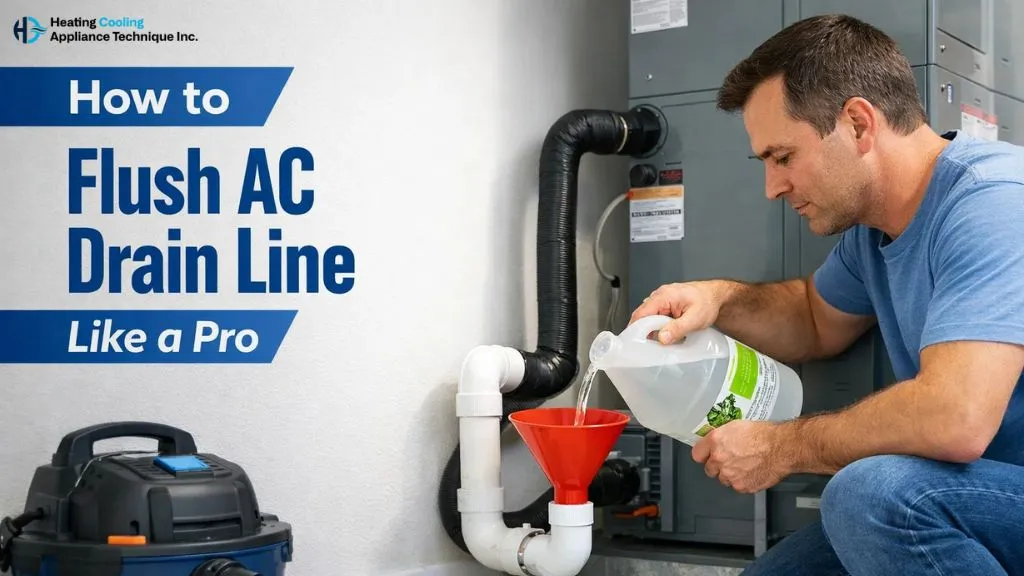
Step 4: Flush with Vinegar or Bleach
Pour about 1 cup of distilled vinegar (preferred) into the drain line.
✔ Kills algae and mold
✔ Breaks down buildup
Let it sit for 30 minutes.
Step 5: Use a Wet/Dry Vacuum
Attach the vacuum to the outside drain pipe and run it for 1–2 minutes to pull out debris.
Step 6: Rinse with Water
Flush the line with clean water to ensure everything is cleared.
Step 7: Turn the System Back On
Restore power and check if the drainage is working properly.
How Often Should You Flush Your AC Drain Line?
To avoid clogs:
- Flush every 1–3 months during cooling season
- Do it more often in humid climates
Regular maintenance prevents costly repairs later.
Pro Tips to Prevent Future Clogs
Want to avoid doing this too often? Here’s what pros do:
- Add vinegar monthly to prevent buildup
- Install a float switch for overflow protection
- Keep the drain line area clean
- Schedule yearly HVAC maintenance
Common Mistakes to Avoid
Even simple tasks can go wrong. Avoid these:
❌ Using too much bleach (can damage pipes)
❌ Forgetting to turn off power
❌ Skipping vacuum step
❌ Ignoring recurring clogs
When to Call a Professional
Sometimes DIY isn’t enough.
Call an HVAC technician if:
- The clog keeps coming back
- You notice water damage
- The AC stops working completely
- There’s strong mold growth
Benefits of Flushing Your AC Drain Line
Keeping your drain line clean helps:
- Improve AC efficiency
- Prevent water damage
- Reduce mold and odors
- Extend system lifespan
- Lower maintenance costs
Yes, regular flushing prevents costly repairs and improves performance.
Final Thoughts
Learning how to flush AC drain line is one of the easiest ways to protect your air conditioning system.
It takes less than an hour but can save you from expensive repairs, water damage, and system failure.
Make it part of your regular home maintenance routine, and your AC will thank you.