You change the temperature, walk away, and later your house feels “off.” Too warm. Too cold. Or your energy bill spikes and you swear you didn’t do anything different. A lot of the time, the culprit is one small word on the thermostat: Hold.
The confusing part is that “Hold” isn’t automatically good or bad. It’s more like a tool. Used at the right moment, it can make your home more comfortable and even help avoid unnecessary heating and cooling. Used the wrong way—or left on accidentally—it can quietly work against your schedule, your comfort, and your utility costs.
What Does “Thermostat Hold” Mean?
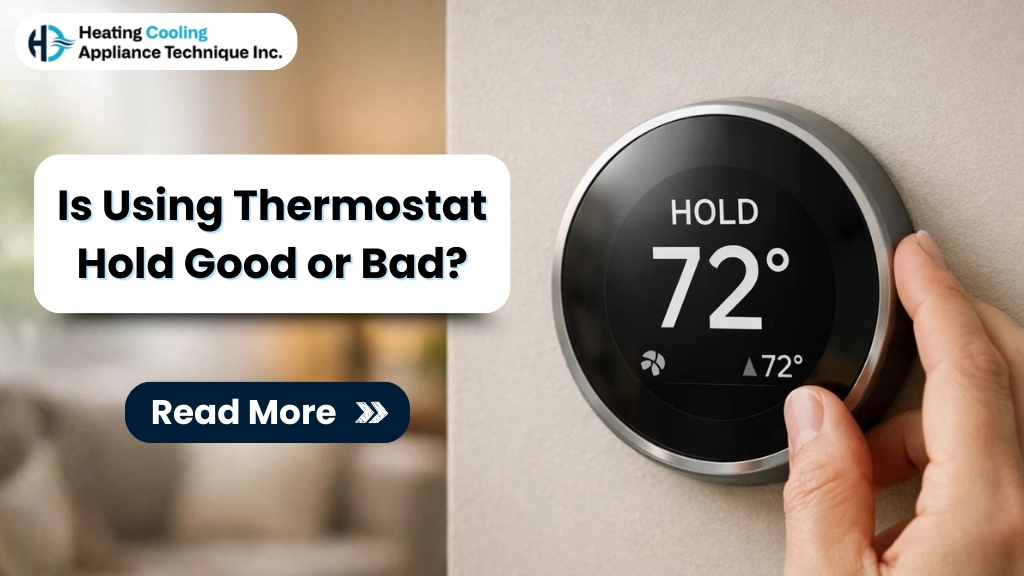
Thermostat hold meaning is simple: it tells your thermostat to ignore its programmed schedule and stay at one temperature until you cancel hold, change the setting, or a timer expires (depending on the model).
Most thermostats offer a few versions of thermostat hold setting, such as:
- Temporary Hold: Overrides the schedule for a set period (often until the next scheduled change).
- Permanent Hold: Overrides the schedule indefinitely.
- Vacation/Away Hold: Maintains an efficient setpoint while you’re gone for days.
If you’ve ever bumped the temp up during a cold snap and noticed the thermostat “stopped following the schedule,” that’s hold doing its job.
Is Thermostat Hold Good or Bad? It Depends on One Thing
The deciding factor is this:
Does your “held” temperature match what your home actually needs right now?
- If it matches your lifestyle and occupancy, hold can be helpful.
- If it forces your HVAC to maintain comfort when it’s not needed, hold can be wasteful.
When Thermostat Hold Is Usually a Good Thing
1) Your routine changes often
Schedules work best when your days are predictable. If your life isn’t predictable, the schedule can “miss” and run heating/cooling when nobody benefits from it.
Real example:
A rotating shift worker sets a schedule for a normal 9–5 day. The AC kicks on hard in the afternoon… while they’re asleep. A hold can prevent that mismatch.
2) You’re home unexpectedly
Remote work days, sick days, surprise errands, kids home early—these are classic moments where hold makes life easier. You’re not reprogramming anything; you’re just stabilizing comfort for a short window.
3) You’re hosting people
More bodies = more heat. Plus cooking, doors opening, and activity change indoor temperature quickly. A hold can keep the home from drifting into uncomfortable zones during busy times.
4) You’re leaving town
If you’ll be gone for days, a hold-like “away” mode can keep your home in a safe, efficient range without the thermostat trying to hit “normal comfort” temperatures all week.
When Thermostat Hold Is Usually a Bad Thing
1) You hold a comfort temperature all day in extreme weather
If it’s very hot or very cold outside, holding your favorite comfort setting 24/7 can increase runtime—especially if your schedule would normally allow the temperature to relax while you’re away or asleep.
Simple way to think about it:
Schedules create “rest periods” for your HVAC. Permanent hold can remove those rest periods.
2) You forget you turned it on
This is the most common reason people end up frustrated. They set hold for one evening, then realize three days later the schedule never resumed.
3) You have a smart thermostat designed to optimize
Many smart thermostats use learning, occupancy patterns, and recovery timing to reach comfort efficiently. Permanent hold can reduce or cancel those optimizations and turn your smart system into a basic manual thermostat.
4) Your home has humidity challenges
In humid climates, holding one temperature for long periods can sometimes worsen comfort if the system short-cycles or doesn’t dehumidify effectively. (This depends on equipment sizing and how the system runs.)
Thermostat Hold vs Schedule: What’s the Practical Difference?
Schedule = Autopilot
A schedule is best when your household habits repeat:
- Sleep hours are consistent
- Away hours are consistent
- You want comfort at predictable times
Schedules shine because they reduce heating/cooling when it doesn’t matter much—like during sleep or when you’re out.
Hold = Manual override
Hold is best when today is not “normal”:
- You’re home when you’re usually away
- People are visiting
- You need stable comfort for a specific period
- You’re traveling and want an energy-smart setpoint
In real life, hold is less about efficiency and more about control.
Should I Use Thermostat Hold? A Real-World Rule That Works
Here’s the simplest way to decide without overthinking it:
Use hold when
- Your schedule doesn’t match your day
- You need stable comfort for a short time
- You don’t want to edit your schedule settings
Don’t use hold when
- You’re trying to lower bills long-term
- You have a consistent routine
- You tend to forget to switch settings back
If you’re someone who forgets settings easily, a schedule is safer because it “self-corrects.”
How to Use Hold Without Accidentally Raising Energy Use
1) Prefer temporary hold whenever possible
Temporary hold gives you comfort now, but lets your schedule take over again automatically.
2) Avoid extreme setpoints
Holding an aggressive temperature forces longer runtime. Moderate settings are usually the sweet spot.
3) Think in “hours,” not “forever”
Hold works best when it’s tied to a situation: evening, workday, weekend morning, vacation.
4) Smart thermostat users: treat hold like an exception
If your thermostat learns patterns or uses geofencing, hold is something you use when you want to override the system—not as the default mode.
FAQs
What is thermostat hold meaning?
It means your thermostat keeps one chosen temperature and ignores the programmed schedule until hold ends (or you cancel it).
Is thermostat hold good or bad for saving energy?
It can be either. It helps when it prevents heating/cooling at the wrong times. It hurts when it maintains comfort temps all day unnecessarily or stays on by accident.
Thermostat hold vs schedule: which is better?
Schedules are better for predictable routines and “set it and forget it” savings. Hold is better for unusual days or changing routines.
Should I use thermostat hold in winter?
Yes—when you’re home unexpectedly, hosting, or traveling. But permanent hold at a high temperature all winter can increase energy usage.
Why does my thermostat keep ignoring my schedule?
Usually because hold is still active, or your thermostat is set to “manual” mode instead of “program.” Some models require you to press “Run Schedule” to resume.
Final Take
So, is thermostat hold good or bad?
It’s good when it matches your real life. It’s bad when it overrides smarter settings and stays on longer than intended.
If you want the best of both worlds, keep a schedule for normal days—and use hold only when your day doesn’t follow the script.
If you tell me your thermostat brand/model (Honeywell, Nest, Ecobee, etc.), I can tailor a short section explaining exactly how hold behaves on that specific thermostat (temporary vs permanent) and what setting is best for your situation.